


Shakespeare's Macbeth: Fear and the Motives of Evil
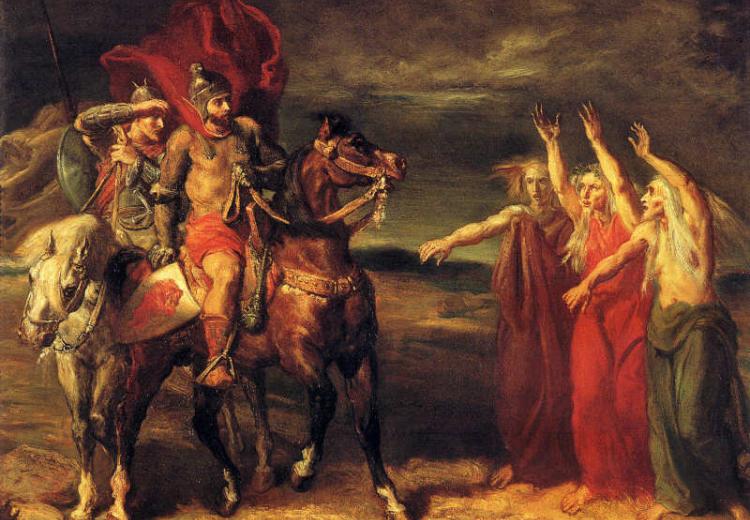
Macbeth and Banquo meeting the witches on the heath

I am in blood
Stepp'd in so far that, should I wade no more,
Returning were as tedious as go o'er:
Strange things I have in head, that will to hand;
Which must be acted ere they may be scann'd.
In his novel, Voyage of the Dawn Treader, C.S. Lewis chronicles an island where all dreams come true. Sounds wonderful, right? But think about it a moment. All dreams. Our fondest wishes, but also our most terrifying fears. On this island, we would meet every shadowy thing we ever imagined to be lurking in the darkness, every terrifying image we ever tried to thrust from our mind. This is the situation in Shakespeare's Macbeth. Just as the three Weird Sisters predicted, or perhaps precipitated, Macbeth's fondest wishes, his secret dreams of power, have all come true. But so too have his darkest fears.
As the play progresses, Macbeth attempts to quell those fears by means of further bloodshed. Until and unless he can murder all who appear to threaten his ill-gotten crown, he feels himself "cabin'd, cribb'd, confined, bound in / To saucy doubts and fears" (3.4.24-25). But equanimity and peace of mind are forever lost to him, as the voice that he seems to hear while murdering Duncan has prophesied: "'Sleep no more! / Macbeth does murder sleep'" (2.2.34-35). In an increasingly desperate attempt to regain those gifts that only a good conscience can bestow, Macbeth alters from a man who, at the beginning of the play, is described as noble and brave, who suffers pangs of conscience over the murder he is premeditating, to a violent and ruthless tyrant, the "fiend of Scotland."
Characters whose shifting minds we feel compelled to follow through every twist and turn are a mark of Shakespeare's mature art and one of the reasons he is considered the great innovator in English drama. Giving students the tools to follow those shifts is the purpose of this lesson. Students will use an Internet search engine (or a printed concordance, if online resources are not accessible) to collect instances in the play of these key words: blood, fear, mind, false, and sleep. Students will then organize and analyze the passages in which these key words appear for what they reveal about Macbeth's state of mind and the motives behind his increasing evil.
Note: This lesson may be taught either as a stand-alone lesson or as a sequel to the complementary EDSITEment lesson, "Shakespeare's Macbeth: Fear and the 'Dagger of the Mind'," in which students read, discuss, and perform a wordless version of the "banquet scene" (3.4) in order to learn how Shakespeare dramatizes fear.
Guiding Questions
Why does Macbeth, who knows that his actions are evil and will be punished, continue to choose evil?
Learning Objectives
Use an online search engine (or a printed concordance) to locate passages that highlight Macbeth's response to fear and his descent into evil
Use the results of this search to analyze the motives of Macbeth's increasingly desperate and evil actions