
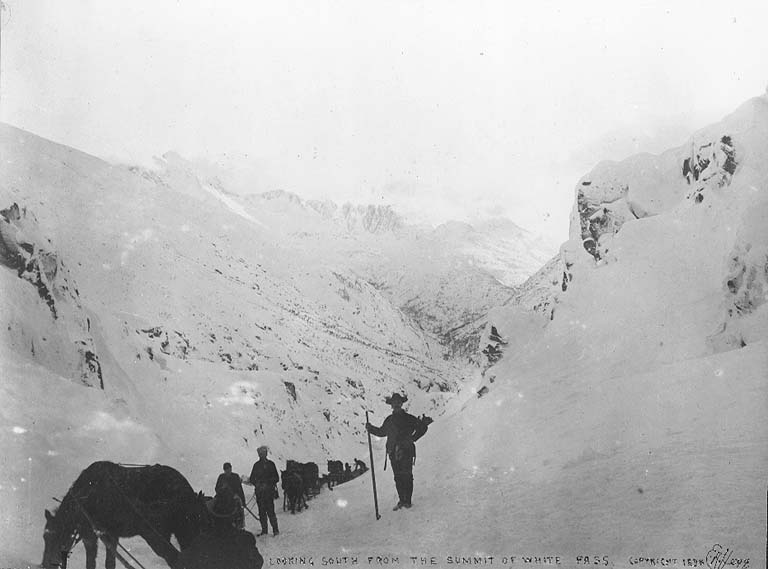
Bound for the Klondike gold fields. Chilkoot Pass, Alaska.
Credit: Image courtesy of American Memory.
… the Yukon provided the metaphorical gold for his [Jack London's] first stories…"
—Dr. Clarice Stasz, from The Jack London Collection,
a link from the EDSITEment resource The Center for Liberal Arts.
The lure of gold is strong. The first nuggets of the Klondike Stampede were brought into the town of Forty Mile on August 20, 1898. Two days later, the town was deserted, claims were being staked out all around the original site, and the Gold Rush was on! Despite the distance and the difficult conditions, thousands of Americans traveled to the Yukon willing to test their mettle in hopes of striking it rich.
One of those who came to the Klondike was Jack London, soon to be an internationally famous author. What he sought in the Yukon was not gold, however, but rather the adventure and "the metaphorical gold for his first stories." London's experiences in the Yukon provided him not only with an appropriate setting for the life and death struggles he wanted to depict, but also with sufficient local color to lend authenticity to his writing.
By "mining" online databases for primary texts and period photographs, your students can explore the Klondike Stampede, and, like London, can glean from their visit sufficient period details to help them create their own narratives based on the Gold Rush. If time does not permit students to write their own stories, the teacher can select stand-alone sections from this lesson that deal with the history of the Gold Rush era. While the emphasis of this lesson is on history and research rather than literature, selections from Jack London's The Call of the Wild are used to provide focus and structure for students' research in online databases of primary sources, and to serve as models of vivid narrative prose for students' own stories.
Note: Students and teachers who have completed all or parts of this stand-alone lesson and who would like to learn more about Jack London may wish to explore the complementary EDSITEment lesson, Jack London's The Call of the Wild: "Nature Faker"?, which explores in depth how his novel, The Call of the Wild, responds to the technical challenge of writing from an animal's perspective without humanizing or sentimentalizing.
After completing this lesson, students will be able to:
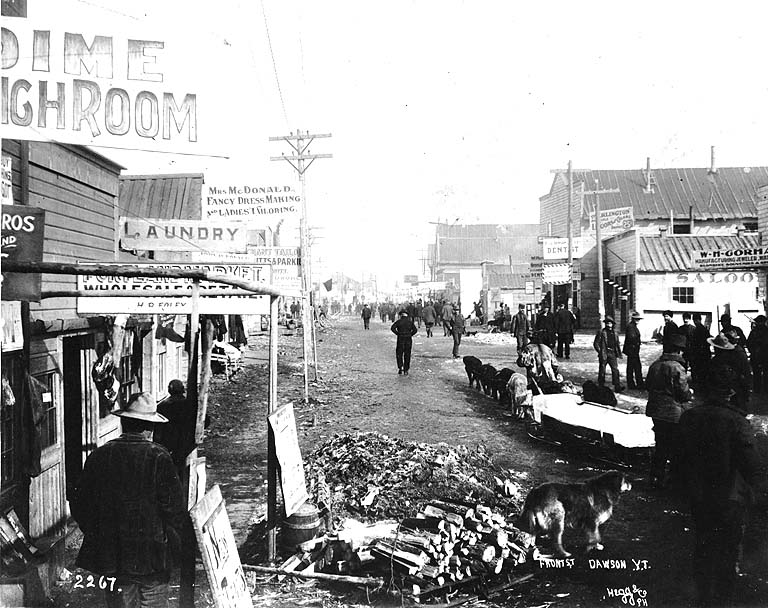
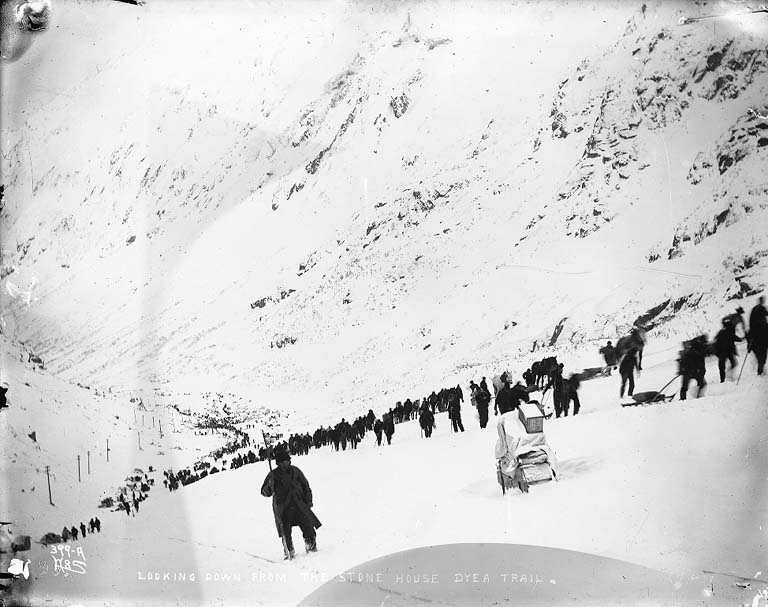
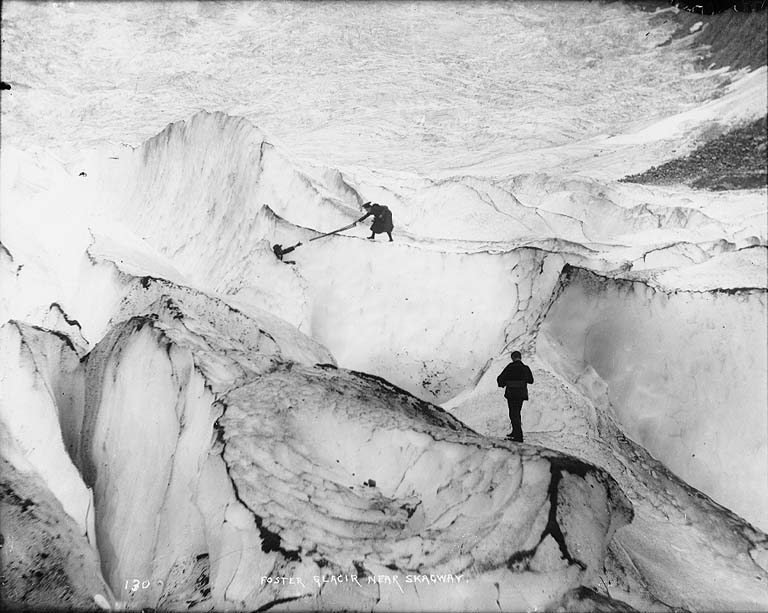
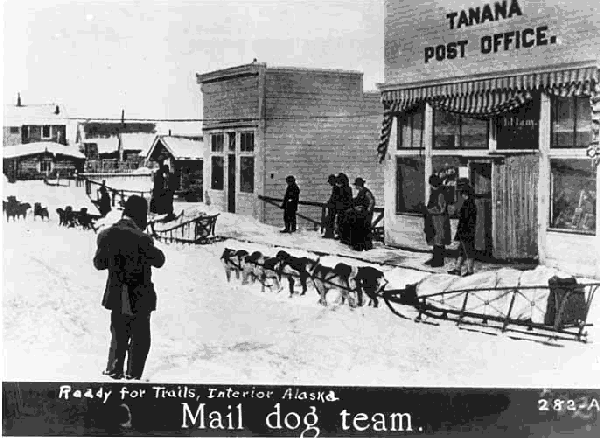
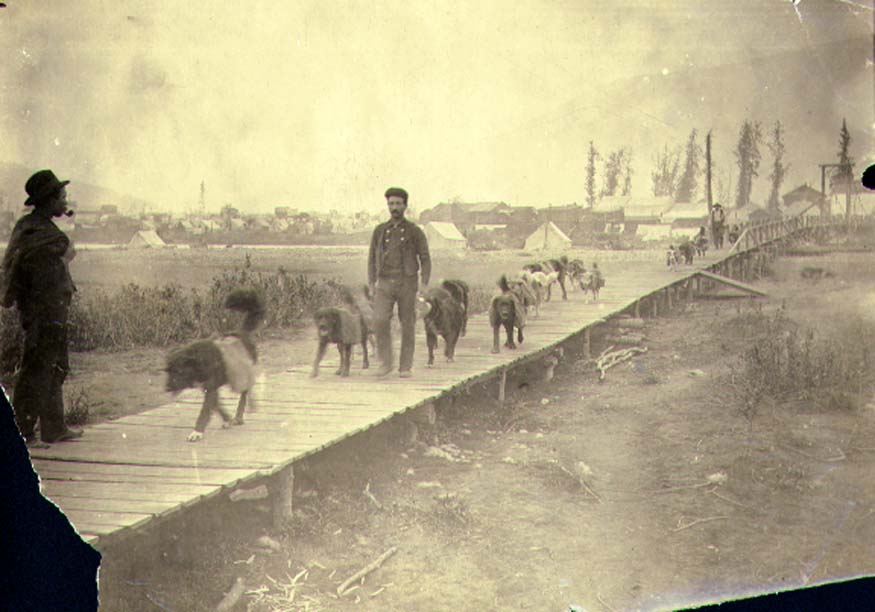
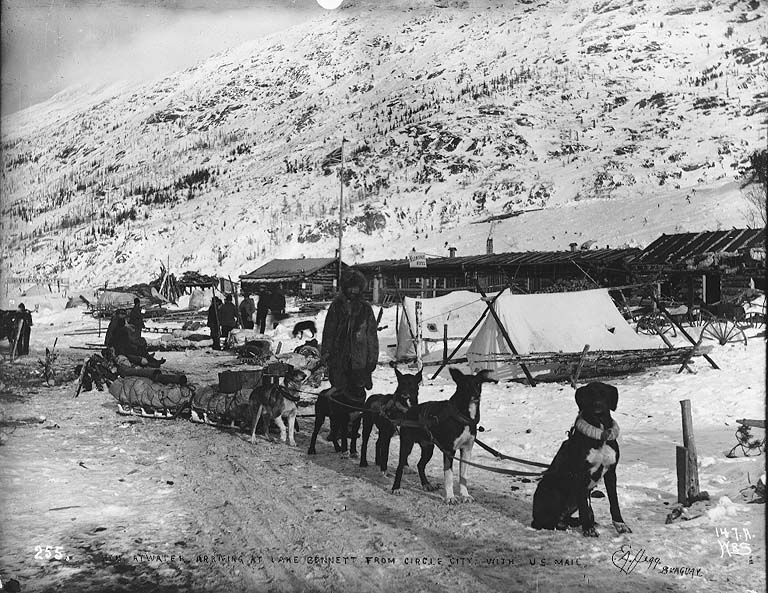
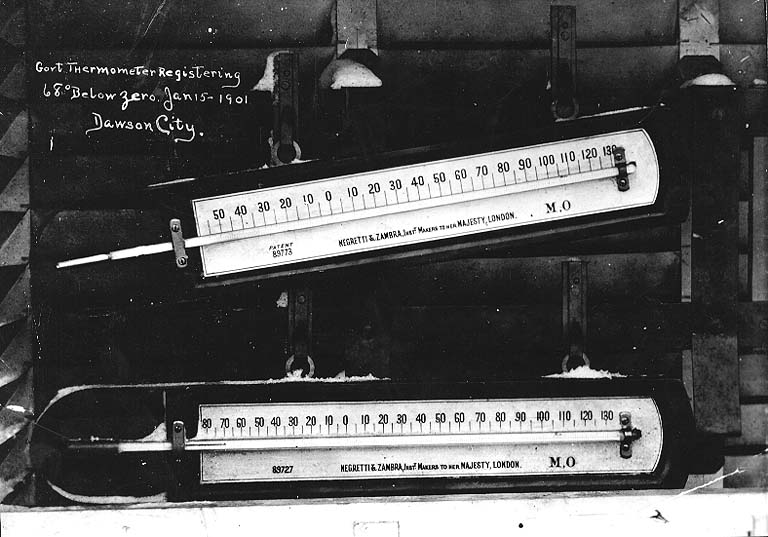
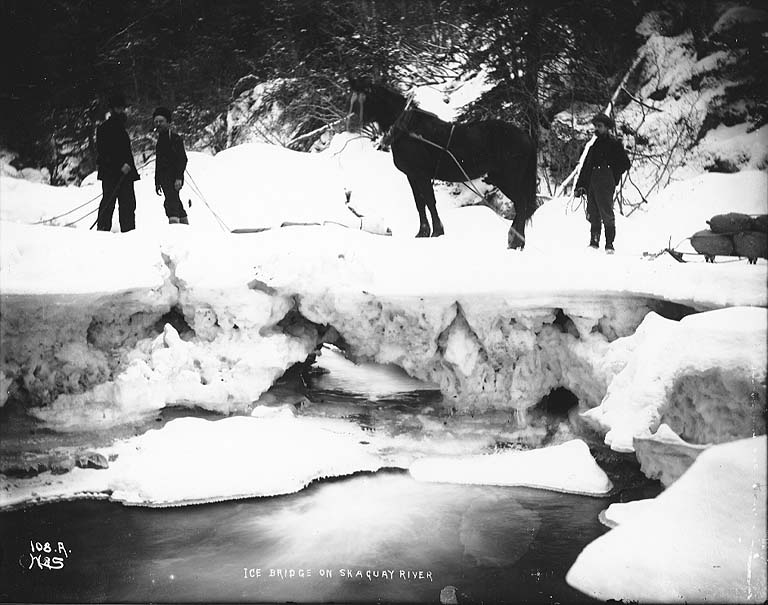
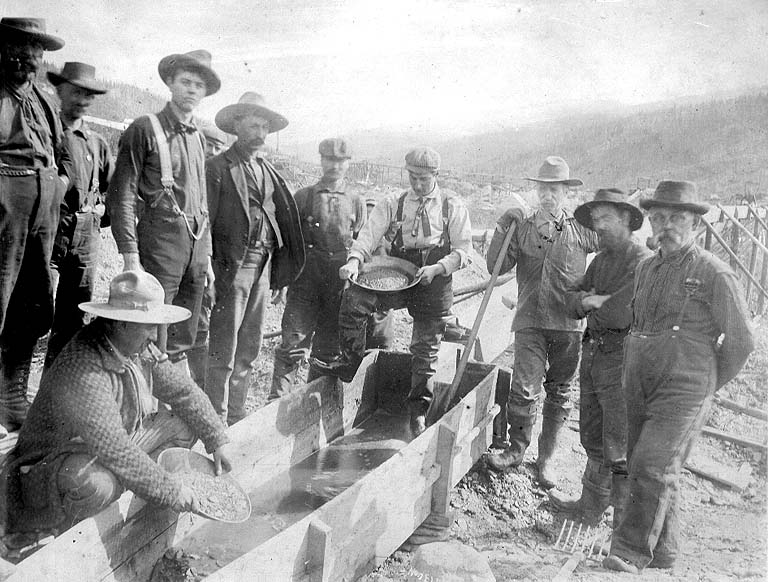
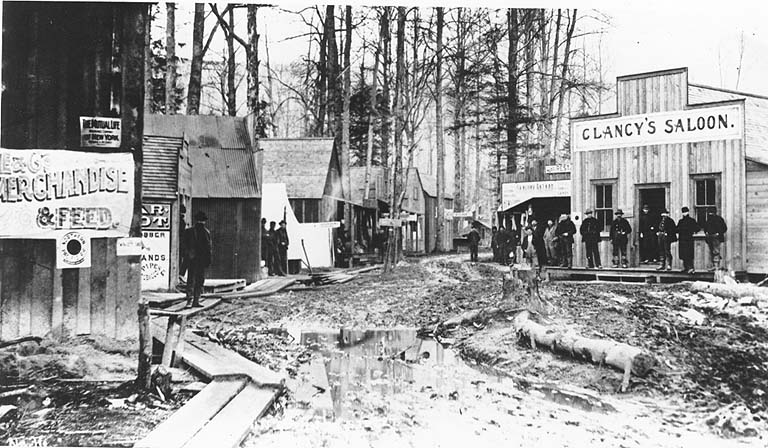
Show your students, in order, the following photographs from the University of Washington Digital Collections, a link from the EDSITEment resource Links to the Past. Have them brainstorm what each image reveals about the Klondike/Alaska Gold Rush.
Tell students they will be gathering images and information (often from first-hand sources) about the Klondike/Alaska Gold Rush as research for writing original stories of historical fiction. Provide some background from Klondike Gold Rush National Historical Park, an online exhibit of The National Park Service, a link from the EDSITEment-reviewed website Links to the Past. In particular, read with your students:
For somewhat more in-depth information, share either of the sources listed under "Preparing to Teach This Lesson." The site Alaska's Gold, a link from the EDSITEment resource Links to the Past, is a very rich source of primary source material and information, aimed primarily at students.
Though The Call of the Wild does not dwell on the historical facts of the Klondike Gold Rush, London added enough genuine details—often using vivid imagery—to lend authenticity and color to his text. Challenge students to use the search functions of the online databases Frank La Roche Photographs, William E. Meed Photographs, and Photos of Eric A Hegg, available on the University of Washington Digital Collections, a link from the EDSITEment-reviewed websites Links to the Past, to locate photographs that could appropriately illustrate the passages from The Call of the Wild on the handout "Images from The Call of the Wild" on pages 1-2 of the PDF.
Here's an example from Chapter 7 of The Call of the Wild. The passage
…a shallow placer in a broad valley where the gold showed like yellow butter across the bottom of the washing pan. They sought no farther. Each day they worked earned them thousands of dollars in clean dust and nuggets
could be matched with the photograph Five prospectors panning for gold in a creek, Alaska, 1897. If possible, print out the picture and display it (or post it on the computer) with the related passage from The Call of the Wild as a caption.
After you distribute the handout, read over the passages with the class. Help students identify key words they can use as search items and then give them the opportunity to work with the databases, individually or in small groups. As students locate photographs, they should write the captions and URLs under the relevant excerpt on the handout. If possible, enable students to share some of their matching images by printing images or displaying them on the computer. NOTE: The related handout "Photos Matched with Images from The Call of the Wild," on pages 3-4 of the PDF matches photographs with the passages and provides their URLs. There may, of course, be other photos that match any particular passage.
Remind students that they will be writing stories set in the Klondike/Alaska Gold Rush. Challenge them to make sure there are passages in the story that could be represented well by a period photograph. In other words, students should include authentic visual images in their stories. If practical, encourage students to illustrate their stories with one or more well-chosen photographs.
While students cannot travel to the Gold Rush like Jack London, they can work together to gather information that will lend authenticity to their stories. The mission of each group below is to advise the rest of the class on the most basic facts in their area of "expertise" and to suggest elements that might be fruitfully included in stories. Neither their research nor presentation is expected to be exhaustive, since, as in The Call of the Wild, the factual elements are not what the book is about, but instead supply authenticity and color.
Divide the class into seven or fewer groups. Each group will explore one assigned category:
For their research, students can use the following EDSITEment resources, which contain extensive material on the Klondike/Alaska Gold Rush. Some particularly useful materials are listed below in each category, but these represent only a sampling of useful materials.
Photographic evidence can be very compelling, as well as a good source of information. The Alaska Collections of the University of Washington Libraries' Digital Collections has three searchable databases of period photographs, including the Frank La Roche Photographs and William E. Meed Photographs. The third collection, Photos of Eric A. Hegg, is the largest and has a useful map illustrating predefined search categories. Click on the map icons for thumbnail photographs in categories including White Pass, Chilkoot Pass, Women, and Transportation. Click on the thumbnails for larger images. Students can also conduct keyword searches.
Group 1: Traveling to the Klondike
Group 2: Animals of the Yukon
What animals were used in the Yukon? What jobs did they do? How were animals (particularly dogs) transported to the Klondike?
Group 3: On the Trail
What were conditions like on the trail?
Group 4: Geography
What geographical features did Klondikers have to confront?
Group 5: Who Came to the Klondike?
What kinds of people came to the Klondike? What motivated them to go? What did they do when they got there, in addition to those who went to the gold fields?
Group 6: Equipment
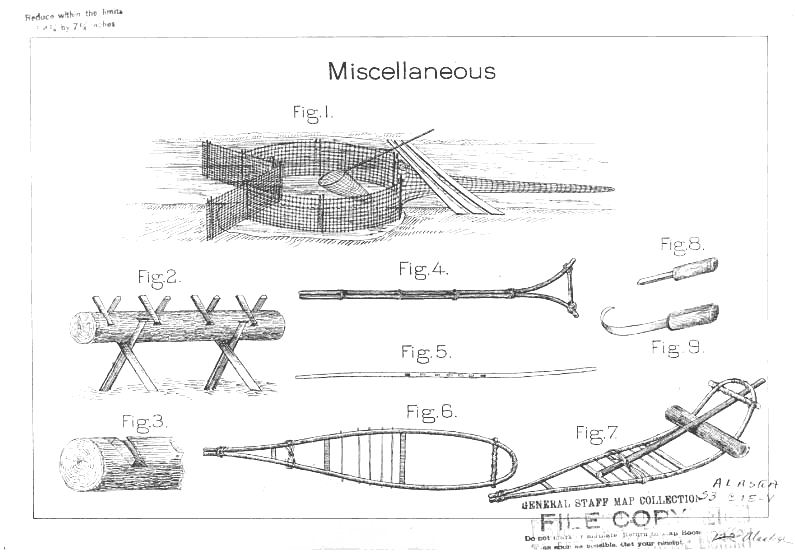
What kinds of equipment did the Klondike Stampeders use?
Group 7: In the Towns
What was life like in the established cities and boom towns affected by the gold rush?
Once students have completed their research, they should present their findings to the class.
Set as a goal that students vary the length and structure of their sentences in their stories of historical fiction. As a class, make a comparison between the following passages from The Call of the Wild. Count the words in each sentence. Note the location of the simple subject(s) and verb in sentences that do not begin with subject/verb.
From Chapter 5:
(Note the short sentences describing the weary dog team; the full stops slow the reader's pace as well. Note the effect of the parallel structure in the sentence beginning "It was not the dead tiredness…." Note the effective repetition in "Every muscle, every fiber, every cell, was tired, dead tired.")
They were all terribly footsore. No spring or rebound was left in them. Their feet fell heavily on the trail, jarring their bodies and doubling the fatigue of a day's travel. There was nothing the matter with them except that they were dead tired. It was not the dead tiredness that comes through brief and excessive effort, from which recovery is a matter of hours; but it was the dead tiredness that comes through the slow and prolonged strength drainage of months of toil. There was no power of recuperation left, no reserve strength to call upon. It had been all used, the last least bit of it. Every muscle, every fiber, every cell, was tired, dead tired. And there was reason for it. In less than five months they had traveled twenty-five hundred miles, during the last eighteen hundred of which they had but five days' rest. When they arrived at Skaguay, they were apparently on their last legs. They could barely keep the traces taut, and on the down grades just managed to keep out of the way of the sled.
From Chapter 7:
(Note how the short sentence "There was no withstanding him" comes in the midst of a series of long sentences. The long sentences capture the confused energy of the moment. The short sentence makes the reader stop for a moment to focus on Buck.)
The Yeehats were dancing about the wreckage of the spruce-bough lodge when they heard a fearful roaring and saw rushing upon them an animal the like of which they had never seen before. It was Buck, a live hurricane of fury, hurling himself upon them in a frenzy to destroy. He sprang at the foremost man-it was the chief of the Yeehats-ripping the throat wide open till the rent jugular spouted a fountain of blood. He did not pause to worry the victim, but ripped in passing, with the next bound tearing wide the throat of a second man. There was no withstanding him. He plunged about in their very midst, tearing, rending, destroying, in constant and terrific motion which defied the arrows they discharged at him. In fact, so inconceivably rapid were his movements, and so closely were the Indians tangled together, that they shot one another with the arrows; and one young hunter, hurling a spear at Buck in mid-air, drove it through the chest of another hunter with such force that the point broke through the skin of the back and stood out beyond. Then a panic seized the Yeehats, and they fled in terror to the woods, proclaiming as they fled the advent of the Evil Spirit.
Discuss how London's sentences dramatize the events being described.
Students probably need more practice constructing longer, more complex sentences than they do creating short sentences. Conduct the sentence combining exercise on the handout "The Call of the Wild's Sentences: Sentence Combining Exercise" on pages 5-6 of the PDF. More information about sentence combining may be found under "Preparing to Teach This Lesson". London's original sentences, from which the sentence fragments on this handout are gleaned, can be found on "The Call of the Wild's Sentences: London's Combined Sentences" on page 7 of the PDF.
In this activity, students will use a database of Klondike Stampeders to learn a bit about people who rushed to the Klondike. With the dual goals of maintaining historical accuracy to a reasonable degree and varying sentence structures, students will be challenged to write a story about a Klondike Stampeder.
The Valdez Museum and Historical Archive, a link from the EDSITEment-reviewed website Links to the Past, offers a database (Rush Participants Database) with information on individuals who came to the Klondike in search of gold. Included with the database are instructions on the web page entitled Introduction. The database offers information in the following categories:
The database allows searches by last name. Students should feel free to combine elements from a variety of historical figures when creating their own character.
Also available is a list of Black Gold Miners, another link from the EDSITEment resource Links to the Past. Another focus should be on the Indians who worked for the Klondikers and with whom the prospectors interacted.
Virtually all of the resources listed below can be fruitfully mined for information and "color" for stories. Students can use elements from first-hand accounts. Photographs—those listed under the "Selected EDSITEment Websites" section, and the many others found on other EDSITEment resources and links—can be a rich source of detail. Here are a few specific sources students might find useful, all links from the EDSITEment-reviewed website Links to the Past:
Students can choose to write their tales in the form of letters, such as these on the website of the Library of the State of Alaska, a link from the EDSITEment resource Links to the Past:
Provide opportunities for students to share their work through readings, printings, or postings.
4-5 class periods