

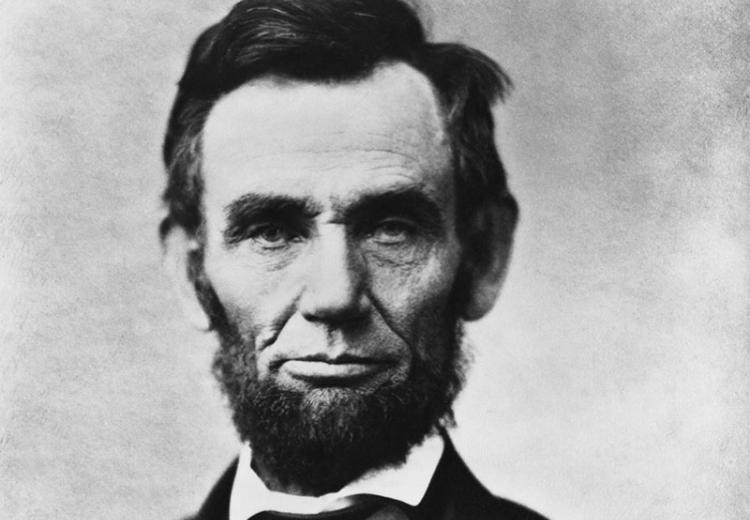
This lesson plan explores the decision-making process that precipitated the Civil War, focusing on deliberations within the Lincoln administration that led to the Confederate attack on Fort Sumter in April 1861. Students first review the situation that Lincoln inherited when he took office in March 1861, and summarize his views on the critical issues before him as reflected in his First Inaugural Address. Then students examine the conflicting recommendations that Lincoln received from his cabinet as he formulated a response to the Confederate demand that federal troops evacuate Fort Sumter in Charleston, South Carolina. Working with primary documents, students argue the risks and benefits of the options Lincoln had before him, re-enacting the debate among his cabinet members, and then, based on Lincoln's final decision, seek to determine what he thought was ultimately at stake. Finally, students investigate the Confederate contention that, by attempting to secure Fort Sumter, Lincoln provoked the South to defend itself and thus ignited the Civil War. Looking back at the words Lincoln addressed to the secessionists in his First Inaugural Address -- "We must not be enemies" -- students consider whether or not his actions bore out those sentiments.
The Battle of Fort Sumter, though one of the shortest of the Civil War and one of the few with no casualties on either side, remains a key moment in the history of that conflict, not only because it marked the opening of armed hostilities but also because it brought the meaning of secession sharply into focus for both sides. Begin this lesson by reviewing with students the events that led up to the battle, drawing on the resources available through EDSITEment at the Crisis at Fort Sumter.
Outpolled by his rivals in the election of 1860, Lincoln did not win a majority of the popular vote. He did capture a majority in the North, while his sharpest critic, Breckinridge, took less than half the vote in the slave states. Despite this equivocal outcome, Lincoln's victory emboldened the advocates of Southern secession. For additional information on the election, see the "Background" section titled The Election of 1860. To learn more about the Southern secession, see the "Background" section titled Secession in the Deep South. To access information regarding the secession of specific states, scroll down to the calendar icon at the bottom. Click on the following dates for further analysis of the secession of these states: Florida (January 10), Alabama (January 11), Georgia (January 19), Louisiana (January 26), and Texas (February 1).
o gauge how Lincoln reacted to these developments and the situation that faced him as he took office, have students read his First Inaugural Address, available through EDSITEment at the Presidential Speeches website. (At the website's homepage, click on "Abraham Lincoln," then select "First Inaugural Address, 1861.") Divide the class into study groups, each representing one of the constituencies addressed by Lincoln's speech. Have each group report on its "reaction" to his speech, citing passages where he addressed issues vital to their interests. For example:
Have students research the situation at Fort Sumter during this period, using the resources available through EDSITEment at the Crisis at Fort Sumter. Many federal forts were taken over by state forces during the period of secession, but Fort Sumter was an exception to these seizures. It was not easily defended, being surrounded by three other forts which were all in Confederate hands. It was also the least significant in terms of military value and the one most in need of supplies. Soon after Lincoln's inauguration, the fort's commander sent word that he would be without provisions for his troops by mid-April. Upon taking office, then, Lincoln was faced with the decision whether or not to preserve a force at Fort Sumter, and if so, how? By March 29, this question had become critical and Lincoln convened a cabinet meeting to help him determine the best course to take.
Provide students with transcripts of the written opinions that Lincoln's cabinet members submitted after their meeting on March 29, using the resources available through EDSITEment at the Crisis at Fort Sumter website. (At the website's homepage, click on "Hesitation and Decision," then click "Problem 4" in the calendar. Scroll down to the pictures of Lincoln's cabinet members: William H. Seward, Secretary of State; Montgomery Blair, Postmaster-General; Gideon Welles, Secretary of the Navy; Caleb B. Smith, Secretary of the Interior; Salmon P. Chase, Secretary of the Treasury; and Edward Bates, Attorney-General. Click on each picture to reach a summary of that cabinet member's opinion, then click "Advice" to retrieve a transcript of his written recommendation.) Have students work in groups to sort out the options that were presented to Lincoln, and the risks and benefits associated with each course of action. Then debate these choices:
Have each student write an executive memorandum expressing a choice among these options (or a preference for some other option), explaining the reasons for that choice, and forecasting the consequences of that choice in the situation Lincoln had before him.
Have members of the class share their memoranda, then discuss what Lincoln might have written in a memorandum justifying his decision: to supply Fort Sumter with provisions only and to inform Confederate officials beforehand, assuring them that no troops would be landed if the supply mission were not attacked.
Conclude this lesson by taking up the Confederate charge that Lincoln provoked civil war by his actions at Fort Sumter. What should he have done if he had wanted to preserve the peace and seek a compromise with the secessionists?
We are not enemies, but friends. We must not be enemies. Though passion may have strained it must not break our bonds of affection. The mystic chords of memory, stretching from every battlefield and patriot grave to every living heart and hearthstone all over this broad land, will yet swell the chorus of the Union, when again touched, as surely they will be, by the better angels of our nature.Have students reflect on this passage in relation to Lincoln's actions at Fort Sumter and write an editorial, for publication on the day after the battle there, commenting on whether "the better angels of our nature" played a part in Lincoln's decision.
To gain additional perspective on the crisis at Fort Sumter, have students research contemporary news reports in Northern and Southern newspapers, available through EDSITEment at the Valley of the Shadow website. (At the website's homepage, click on "Enter the Valley Archive," then select "The War Years" and click on "Newspapers" in the navigation graphic. Click on "Newspaper Search Page" and select "Search All Civil War Newspapers," then choose "Year: All" and type "Fort Sumter" into the text box for a list of news articles covering the Fort Sumter crisis.) For analysis of a difficult presidential decision in a different era, see the 1996 article "America, Franklin D. Roosevelt and the Holocaust," by William J. vanden Heuvel, available through EDSITEment at the New Deal Network website. (At the website's homepage, click on "Franklin and Eleanor Roosevelt Institute," then select "Topics and Issues" at the bottom of the page for the text of the article.)
9-12
2 class periods