

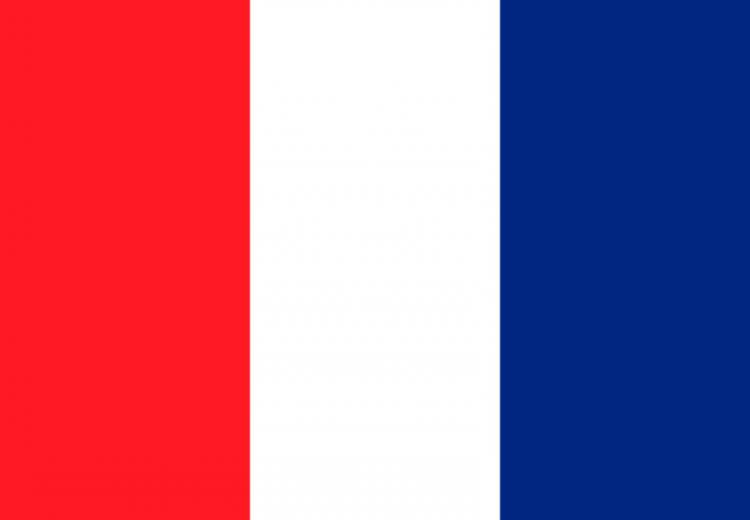
Flags of French-speaking areas: France, Quebec, Congo
Young children are fascinated, though sometimes a bit frightened, by cultures different from their own. They are also at a stage of development when it's exciting and relatively easy to acquire new vocabulary. This unit on French language and culture takes full advantage of these points; and its focus on the family — a subject to which all students can relate — keeps the lessons simple and age-appropriate. Students will learn about French families and gain a preliminary knowledge of the French language, learning the French names for various family members.
Display a large world map prominently in class. Begin the lesson by asking students to name their town or city, their state and their country. As students answer these questions, point out to students where these areas are located on the world map.
Ask students what language they speak. Have they heard of any other languages? Do they know people who speak other languages? Explain to students that in the U.S., people speak many different languages because they come to this country from other places around the world. You can point out that while the official language of the U.S. is English, it's fun to learn other languages so that we can communicate with the people who speak these languages when they come to the U.S. or when we visit other countries. You can also point out examples of English that come from the French and mention that, more recently, French uses some English words as well: "broonies" ("brownies").
Now challenge students to name other countries they have heard of. Each time a new country is named, show students where that country is located on the world map. Ask students if they know what language is spoken in each country — if they are unsure, tell them.
Inform students that they will be learning about the French language and the people who speak it. While French is the official language of some 33 nations, young students will be unfamiliar with many of these. It's best to focus on a few key places — France, of course, and Canada, because of its size and proximity to the U.S., are recommended. You can also mention that parts of Louisiana in the U.S. are French-speaking. Students may be surprised to find that large populations of French-speaking people live so close to and even within the U.S. If time allows, you can point out other areas on your world map where French is spoken, such as Algeria, Belgium, Burkina Faso, Congo, French Guiana, Guadeloupe, Guinea, Haiti, the Ivory Coast, Luxembourg, Madagascar, Mali, Martinique, Senegal, Switzerland, and Zaire. You can familiarize students with these Francophone countries using the following EDSITEment resources:
Note: If some students speak a second language, encourage them to tell the class what language they speak and where their family originated. Perhaps they will even be willing to speak some simple phrases in class.
In this lesson, students will compare and contrast different aspects of their daily lives with those of families living in France. The websites listed below, all links from the EDSITEment resource Internet Public Library, provide student-friendly information on French culture. Refer to the Other Resources section below for additional print resources, if you prefer. Begin each section with a discussion of life in America. Then refer to the suggested websites for a related picture of life in France. Challenge students to identify similarities and differences between the two nations.
Daily Life
Let students know they will compare a typical day in their lives with a typical day in the life of a student in France. Show students the images of life in France from the following links:
As you view the pictures together, help students pick out details that give some clues to what life is like in France. For example, what does Dimitri Naissant use for transportation? What does he do for fun? What does he like to eat? Keep a list of students' answers. You may wish to develop a chart with a column for life in France and another column for life in the U.S. After listing some of the information students find about France, ask them how this is similar to or different from their own lives. Do your students have the same favorite foods as Dimitri? Do their homes look similar to Dimitri's house?
Finish this lesson by reading Dimitri's narrative to students, or having students work alone or in small groups to read it on their own. During or after the reading, ask students if they picked out any additional details about daily life in France, and how those details compare to life in the U.S. Add the new information to your chart.
Mealtimes
Discuss the meals students eat each day, making a chart with students' responses. When do they eat each meal? What foods do they typically consume during each meal? With whom do they share their meals? What are some of their favorite foods? What types of foods do other members of their families enjoy?
Read aloud or have students read about a typical day's meals in France from On the Line: French Virtual Journey: Food: A Typical Day. Ask students to name some of the details they heard about meals in France, and compare them to students' typical meals in the U.S., adding the information to the chart.
Games and Sports
Ask students what games they enjoy playing. What equipment is needed for students' favorite games? Introduce students to "La Petanque," a popular French playground or gymnasium game similar to bowling, available through the EDSITEment-reviewed American Association of Teachers of French and through Internet Public Library's Culture Quest World Tour: Games of France. If possible, take students to the playground or gymnasium and have them play a game of La Petanque. Is this game similar to anything students have seen before? Have the students themselves ever played a game like this?
What sports do students watch? What sports do other members of their families like to play or watch? Make a list of sports students name. On the Line: French Virtual Journey: Sport lists the most popular sports in France as well as some of the major sporting events that take place there; work with students to compare the sports that are popular in France with some of their favorite sports.
Holidays
Talk about important national holidays in the U.S. (Note: While students are welcome to name any holiday, try to focus their attention on national, secular holidays.) What is the significance of the Fourth of July?
Share with students information about two French national holidays — Bastille Day (July 14) and Armistice Day (November 11) — from Internet Public Library's Culture Quest World Tour: Holidays of France. How are these holidays like the holidays celebrated in the U.S.? How do French people celebrate these important dates? How does the celebration compare with holiday celebrations in the U.S.? (Note: The French holiday Armistice Day is celebrated on the same date as Veterans' Day in the U.S. If you wish, point out this connection to students and discuss the similarities and differences between the two holidays.)
Let students know that they will learn the French words for names of family members, including mother, father, brother, sister and so on. Begin the lesson by brainstorming in class the different family relationships of which students are aware. You may want to limit your list to the names of family members with whom students live. Write the English words on the blackboard, with their French translations next to them. (Whenever possible, focus on cognates — words similar in form and meaning, italicized below — as a tool to help students recall new vocabulary.) Pronounce each French word several times, allowing the class to repeat each time. A pronunciation key is provided in the section Preparing to Teach This Lesson.
Family: famille
Parents: parents
Mother: Mere
Mom/Mommy: Maman
Father: Pere
Dad/Daddy: Papa
Sister: soeur
Brother: frere
Grandparents: grands-parents
Grandmother: grand-mere
Grandma: grand-maman
Grandfather: grand-pere
Grandpa: grand-papa
Aunt: tante
Uncle: oncle
Cousin: cousin(e)
Stepmother: belle-mere
Stepfather: beau-pere
Stepsister: demi-soeur
Stepbrother: demi-frere
Once students have been introduced to the new words and their pronunciations, play a multi-modal learning game that will allow them to link the auditory input with a visual cue. Supply students with an array of magazines. Have students work in pairs to find and cut out pictures of people who seem to represent a specific family role (Make sure to include pictures of diverse family members and of ethnically diverse people). Paste the pictures onto individual pieces of construction paper or cardboard, flash-card style. If students are able, allow them to print the appropriate family member name on the back of each card in both French and English, using the words on the blackboard as a guide. (If students are unable to do this, the teacher should print the words on the cards for them.) Students who can read can pair off and practice with the flash cards on their own. For students not yet reading, the teacher can hold up the cards, say the words, and have students repeat the words.
As an alternate or additional activity, create a family tree on the classroom bulletin board. Use pictures from magazines, as in the flash-card activity, and have students "vote" for the picture that best represents each family member. Create the trunk and branches of your tree with a marker or construction paper. Then paste the pictures in their proper positions on the tree. Include the French and English words for each family member represented beneath the appropriate picture (or, if space permits, create two family trees—one in French, and one in English). Use the family tree as a learning tool for recalling new vocabulary. Students can also create their own family trees, using actual photos of family members, mounted on poster board.
one: un |
| six: six |
two: deux | seven: sept | |
three: trois | eight: huit | |
four: quatre | nine: neuf | |
five: cinq | ten: dix |
| Alouette, gentille Alouette | Skylark, kind skylark | |
| Alouette, je te plumerai | Skylark, I will pluck you |
| la tete: head | le nez: nose | |
| les yeux: eyes | le cou: neck | |
| les ailes: wings | le dos: back | |
| les pattes: feet | la queue: tail |
2-3 class periods