
Face of 19th-century ceramic doll
This lesson offers students experience in drawing historical meaning from eyewitness accounts that present a range of different perspectives. Students begin with a case study including alternative reports of a single event: the Great Chicago Fire of 1871. Students compare two newspaper reports on the fire and two memoirs of the fire written many decades later, with an eye on how these accounts complement and compete with one another, and how these sources can be used to draw historical meaning from them. Students then apply the lessons learned in their investigation of the eyewitness accounts of the Chicago fire by considering a unique eyewitness account: the diary kept by a Confederate girl when her Tennessee town was occupied by Union troops during the Civil War.
When students have completed this lesson they will have:
Distribute copies of the Written Document Analysis Worksheet, from the website Digital Classroom, to the class. Discuss with students how they can use the worksheet to gather together various kinds of information in an historical document, including facts about the document itself (date, author, audience, etc.) and facts about the past. Explain that in this lesson students will use the worksheet to examine a variety of historical eyewitness reports, first comparing several reports of a single dramatic event, then evaluating the unique account of a different, more complex historical situation.
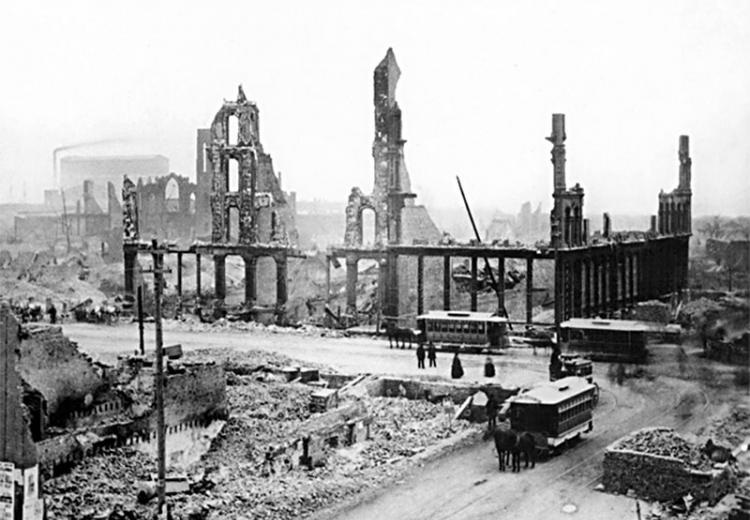
Have students read the following two newspaper accounts of the Great Chicago Fire of 1871, The Great Chicago Fire and the Web of Memory. The first reading is The Tribune Reports to Chicago on Its Own Destruction, and is a front page report from the Chicago Tribune published two days after the fire, on October 11, 1871. The second account is an excerpt from an article that was published by the Chicago Evening Post on October 17, 1871. Once students have finished reading the two newspaper articles, have them work individually or in groups to analyze these two reports using the Written Document Analysis Worksheet. Compare their responses to selected sections of the worksheet in a class discussion. Have students work on answering the following questions, which are also available as a Student Launchpad:
Finally, discuss how an historian might use these alternative accounts of the Chicago Fire.
Because both of these newspaper accounts refer often to the streets and districts of Chicago, students may find it helpful to have a map of the city available as they read. A map of the fire is available from the EDSITEment-reviewed website The Great Chicago Fire and the Web of Memory, as well as a number of illustrations of the events described in the two newspaper reports.
Next have students read two personal accounts of the Chicago Fire included in the collection of the The Great Chicago Fire and the Web of Memory, which includes recollections from 21 survivors of the fire. The narratives of Bessie Bradwell, written in 1926, and Mary Kehoe, written in 1942, form convenient pair from this anthology. Both were teenagers at the time of the fire but they came from different social backgrounds, Bessie Bradwell was the daughter of a judge while Mary Kehoe was from the working class. In this exercise students will be asked to contemplate the strengths, weaknesses, and differences of these accounts.
As in the previous activity, have students work individually or in groups to analyze these two eyewitness accounts using the Written Document Analysis Worksheet. Compare their responses to selected sections of the worksheet in a class discussion. Ask the students to compare these personal recollections of the fire with the newspaper reports written within days of the event.
Invite students to re-write a passage or incident from one of the personal narratives to show how one of the news reporters might have presented it.
Next, have students explore the impact of reflection and memory on these two narratives, written decades after the event they describe. Ask students to answer the following questions. They should provide examples of all the evidence they find within the narratives that answer these questions, which are also available as a Student Launchpad:
Finally, discuss how an historian might use these eyewitness narratives of the Chicago Fire.
As a contrast to this study of alternative eyewitness accounts, have students look at a unique firsthand report, the diary kept by 16-year-old Alice Williamson when Union troops occupied her town, Gallatin, Tennessee, during the Civil War. A transcript of this diary is available through EDSITEment at the Documents of Civil War Women website. Click on "Alice Williamson Diary" at the website's homepage and scroll down for information about her, then click The whole diary near the top of the page. NOTE: This diary reports what today would be regarded as wartime atrocities committed by Union troops and reflects the racial bigotry of its time and place. Teachers should review the diary to determine whether it is appropriate for their classrooms.
Conclude this lesson by having students collect eyewitness reports from present-day newspapers or conduct their own interviews of family members who have witnessed some significant event (for example, an athletic competition, a natural disaster, a public celebration, the coming of some new technology like the automobile or the Internet). Have students use the Written Document Analysis Worksheet to evaluate their eyewitness accounts and then prepare a researcher's report explaining how their document might be used by some future historian.
Have students prepare a researcher's report on the four firsthand accounts of the Chicago Fire that they have read in the previous activities, explaining what they might contribute to three different histories of the event. This should include:
Have students note also in their reports any inadequacies of these primary documents for these kinds of history. What other types of evidence would an historian look for? What other sorts of witnesses could be called on to add their testimony?
If you have time you might have students put their new analytic skills to work by having them collect eyewitness reports from present-day newspapers or conduct their own interviews of family members who have witnessed some significant event (for example, an athletic competition, a natural disaster, a public celebration, the coming of some new technology like the Internet). Have students use the Written Document Analysis Worksheet to evaluate their eyewitness accounts and then prepare a researcher's report explaining how their document might be used by some future historian.
Though unique in this lesson plan, the diary of Alice Williamson is part of an extensive literature of recollections written by Confederate women after the Civil War. For additional examples, go to the Documenting the American South website on EDSITEment, click "First Person Narratives of the American South," then click "Collection of Electronic Texts" and select:
9-12
2-3 class periods