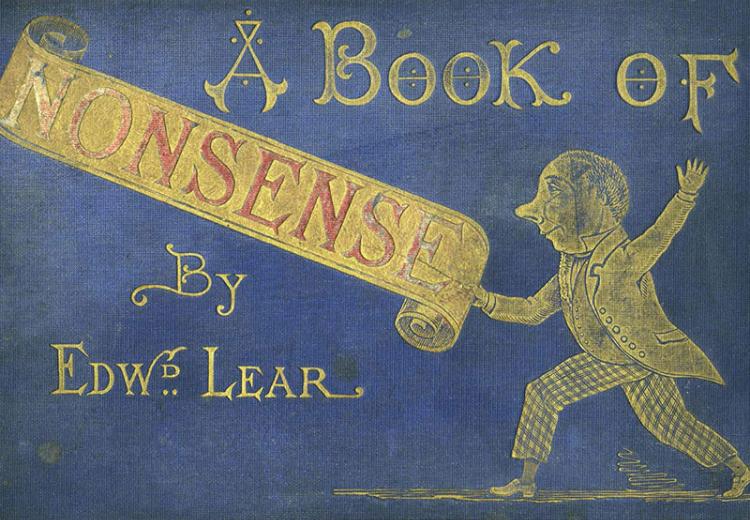

British poet Edward Lear (1812-1888) is widely recognized as the father of the limerick form of poetry and is well known for his nonsense poems. In this lesson, which focuses on Lear's nonsense poem "The Owl and the Pussy Cat," students learn about nonsense poetry as well as the various poetic techniques and devices that poets use to help their readers create a mental picture while reading or hearing poems.
In a related lesson, Edward Lear, Limericks, and Nonsense: There Once Was…, students learn the form of the limerick poem, practice finding the meter and rhyme schemes in various Lear limericks, and write their own limericks.
Who was Edward Lear and what types of poems did he write? What poetic devices and figures of speech are characteristic of nonsense poems?
After completing the lessons in this unit, students will be able to
Download, copy, and distribute to students the Edward Lear nonsense poem The Owl and the Pussy Cat, available via a link from the EDSITEment-reviewed website Internet Public Library. Or, post it for class viewing using a projection device.
Ask the class to comment on the illustration(s). Read the poem aloud to the students, emphasizing the sing-song quality of the stanzas.
Introduce students to each of the following poetic devices:
As a class, identify examples of each technique in the poem.
After the class has identified the literary devices in the first poem, have students form groups to identify the devices in The Broom, the Shovel, the Poker and the Tongs, also available via a link from the EDSITEment resource Internet Public Library.
You may wish to divide the class into two teams and create a game of the activity. See which team can find an example of each poetic device first and keep score. You can repeat this game with many other nonsense poems that are available at Edward Lear, Nonsense Songs, Stories, Botany and Alphabets, accessible through the EDSITEment resource Internet Public Library. Try any of the following:
In groups or individually, have students prepare their own poems using some of the poetic devices learned in this lesson. You may wish to have them create their own alphabet poems modeled after Lear's. Divide the class into groups and assign a block of letters to each group. Have the students compose alliterative poems that include personification for each of their letters. They can also choose to illustrate their poems. Compile a class book and make a copy for each student, or display all of the poems (in alphabetical order) along a bulletin board or wall.
2 class periods