


The Letters and Poems of Emily Dickinson
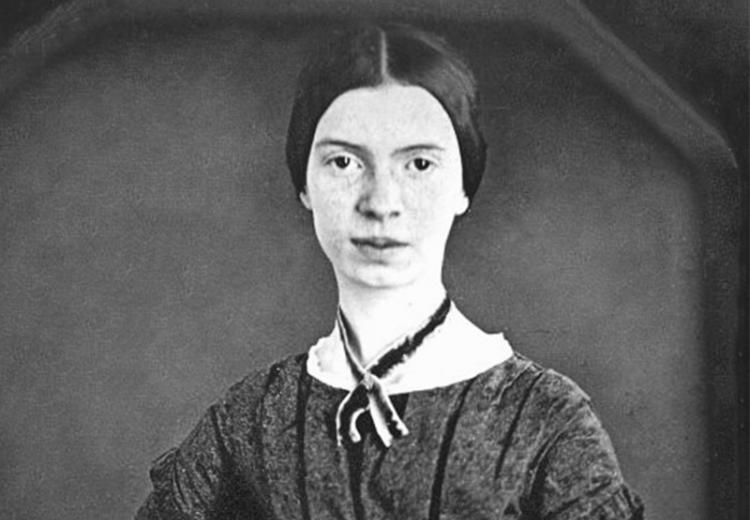
Daguerreotype of the poet Emily Dickinson, taken circa 1848.
.jpg)
"When I state myself, as the representative of the verse, it does not mean me, but a supposed person."
- Emily Dickinson
In 1862, Emily Dickinson, one of the most innovative poets of the 19th century, wrote a letter to Thomas Wentworth Higginson, an editor, writer, and longtime contributor to the Atlantic Monthly who would become her long-time correspondent and mentor. She asked, "Are you too deeply occupied to say if my verse is alive?" Long perceived as a recluse who wrote purely in isolation, Dickinson in reality maintained many dynamic correspondences throughout her lifetime and specifically sought out dialogues on her poetry. These correspondences—both professional and private—reveal a poet keenly aware of the interdependent relationship between poet and reader.
Similarly, Dickinson's letters expose a poet fully engaged in the process of crafting a persona. Ultimately, reading Emily Dickinson's letters alongside her poems helps students to analyze how Dickinson perceived herself and her poetry and consider the ways in which a writer constructs a "supposed person."
In this curriculum unit, students will explore Dickinson's poetry as well as her letters to Higginson and her sister-in-law Susan Huntington Gilbert Dickinson. They will work individually and in groups to reflect on Dickinson's views and the process by which she writes; assume the role of a critic/correspondent and analyze Dickinson's poetry, specifically noting the effectiveness of her persona; and, finally, emulate her writing style while.
Guiding Questions
What did it mean to be a woman of letters during the 19th century?
In what ways does Dickinson's self-perception manifest itself in her poetry?
To what extent were Dickinson's poems influenced by and a reflection of critics and social norms?
Learning Objectives
Identify the key figurative language and stylistic elements in Dickinson's works.
Analyze how Thomas Wentworth Higginson’s editorial relationship with Emily Dickinson affected her poetry.
Analyze the tensions between Dickinson's poetic persona and her personality.
Evaluate the significance of Dickinson's poetry at the time and today.