

The Campaign of 1840: William Henry Harrison and Tyler, Too
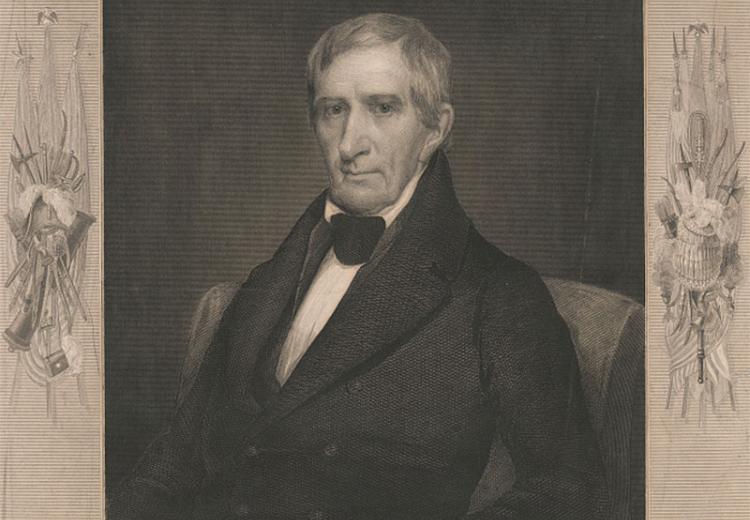
William Henry Harrison.
After the debacle of the one-party presidential campaign of 1824, a new two-party system began to emerge. Strong public reaction to perceived corruption in the vote in the House of Representatives, as well as the popularity of Andrew Jackson, allowed Martin Van Buren to organize a Democratic Party that resurrected a Jeffersonian philosophy of minimalism in the federal government. This new party opposed the tendencies of National Republicans such as John Quincy Adams and Henry Clay to invest more power in the federal government. Van Buren built a political machine to support Jackson in the 1828 election. Van Buren's skills helped give the Democrats a head start on modern-style campaigning and a clear advantage in organization. The Democrats and Jackson defeated the National Republicans in 1828 and 1832 and maintained their hold on the presidency when they bested the Whigs—a union of former National Republicans, Antimasons, and some states' rights advocates—in 1836. But a major economic depression in 1837 finally gave the Whigs their best chance to occupy the White House. They faced Andrew Jackson's political organizer, vice president, and handpicked successor, President Martin Van Buren, vying for a second term in the midst of hard times.
As they prepared for the election of 1840, both Democrats and Whigs were organized for campaigning on a national scale. In an election that would turn out an astounding 80 percent of a greatly expanded electorate, campaigners sought to appeal to a wide range of voters in a variety of voting blocks. The contest between Martin Van Buren and William Henry Harrison marked the first truly modern presidential campaign, with methods today's students are sure to recognize.
Lessons in this unit allow students to become familiar with the issues and personalities and to review an assortment of primary documents. As students analyze them, they reflect on the presidential campaign of 1840. How was it conducted? What was the role of campaign advertising? How crucial were issues to the election of William Henry Harrison? How crucial was image?
Guiding Questions
What issues were important to the presidential campaign of 1840?
In what ways was the campaign about issues? In what way was it about image?
What in William Henry Harrison's background made him the choice of the Whig Party in 1840?
How did the Whigs promote Harrison's image in 1840?
In what ways did Harrison's background correspond with or contradict his image?
What made Martin Van Buren the choice of the Democratic Party in 1836?
How did the Democrats promote Martin Van Buren's image?
In what ways did Van Buren's background correspond with or contradict that image?
Why is the campaign of 1840 often cited as the first modern campaign?
Learning Objectives
List some issues important during the campaign of 1840.
Compare and contrast the careers of Martin Van Buren and William Henry Harrison before they became president.
Explain why the Whigs wanted to find a candidate in the mold of former president Andrew Jackson.
Discuss the ways in which Harrison did and did not fit the mold.
Identify some basic differences between the Democrats and Whigs.
Discuss the use of visual images in the 1840 campaign.
Take a stand as to whether the campaign of 1840 was based more on substance or image.