

Lesson 5: Trekking to Timbuktu: Timbuktu's Golden Age of Scholarship (Teacher Version)
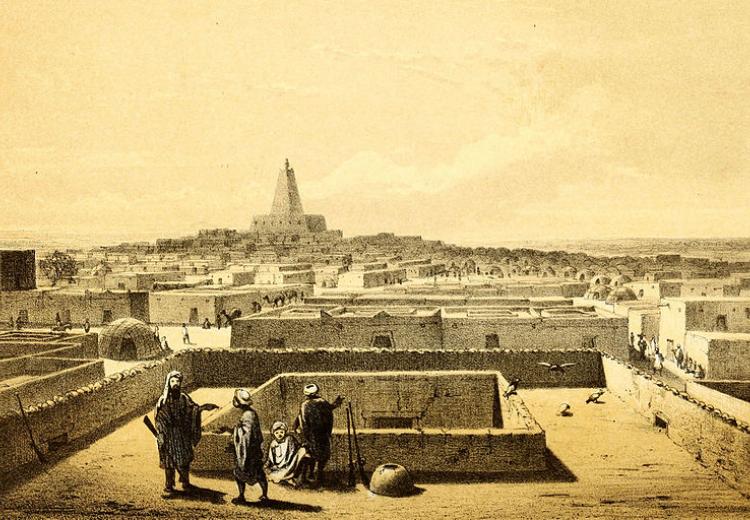
Timbuktu from the terrace of the traveller's house in 1858.

Timbuktu reached its peak as a center of Islamic culture and scholarship in the 16th century. This was its Golden Age. It was now a major city in the Songhai Empire. Of the city's population of nearly 100,000, a quarter were students and scholars. Many of these came from other parts of the Islamic world to study or teach at the cities many madrasas (Islamic schools) and its three universities, the most renowned being that associated with the Sankore Mosque.
Guiding Questions
How did the Songhai Empire come to be?
What factors made Timbuktu a spiritual and intellectual center of Islam?
What was taught in the schools of Timbuktu?
What books were used and for what purpose?
Learning Objectives
Identify the empire of Songhai and describe Timbuktu's role in its economy.
Evaluate the extent to which Timbuktu became an important spiritual and intellectual center of Islam.
Analyze the contributions of Islamic schools in Timbuktu.
Evaluate how manuscripts were produced and used in Timbuktu.